May
Season opens
The easiest month to take seriously, because nobody expects early-season Alaska to be warm. Full layers, hood up, gloves in the pocket.
What to wear
Almost everything that makes this day worth the fare happens on an open deck. The cabin is warm and it has windows, and you will spend some of the six or seven and a half hours in it — but the ice, the rookeries, the blow of a whale and the moment the naturalist points off the bow all happen outside, usually at speed, usually with water moving past you. That is the whole of what to wear on an Alaska boat tour, and it is why people who dressed for the car park end up watching the best part through glass. Dress so that standing outside for an hour is a choice you can keep making. Fares start at $265.
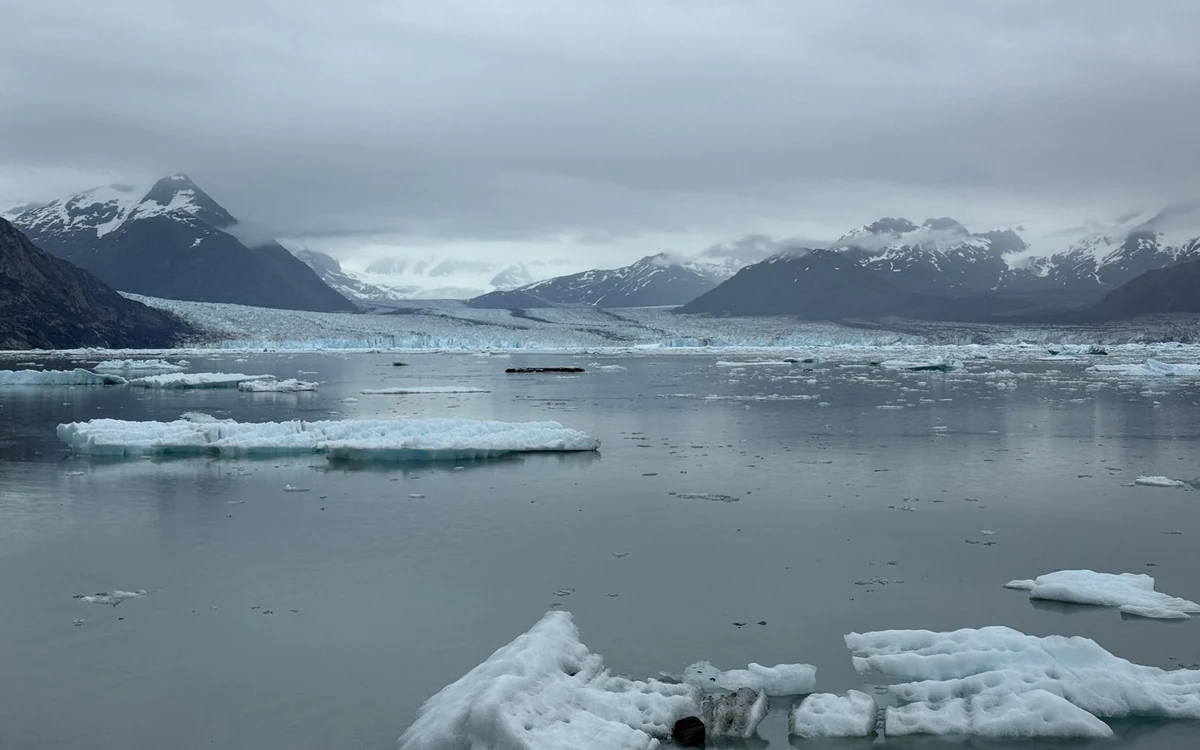
Quick answer
The short answer. Layers under a windproof jacket with a hood, a hat that covers your ears, thin gloves, closed shoes with grip and sunglasses. That is the list, and it is the same list in May and in August. Nobody publishes a temperature for the deck of these boats and we are not going to invent one — the relevant published facts are that these are high-speed catamarans, that the sailings run six to seven and a half hours, and that the glacier stops and the wildlife are outside. Binoculars are provided aboard on $297 and $265; warm clothes are not. If you are paddling rather than cruising, $406 supplies splash tops, spray skirts and life vests, and what you wear underneath is still yours to get right.
Why this trip is different
Wind and water, not winter. Dress for a fast deck and a long stop in front of the ice.
There is a particular kind of disappointment that this trip produces, and it is worth naming because it is entirely preventable. People board at Seward, find a seat in the warm cabin, go outside when the captain calls something over the speaker, last about four minutes at the rail, and come back in. They do that a few times. Then the boat reaches the ice, and the one moment they came for — standing in front of a wall of glacier, waiting for it to make a noise — is a moment they can only manage briefly, because they are wearing a sweatshirt.
The reason has nothing to do with how cold Alaska is in the abstract and everything to do with the fact that you are on a fast boat. The listings for $297 and $265 both describe a stable, high-speed catamaran, which is exactly what you want for covering distance in a day — and a boat covering distance generates wind across its deck regardless of what the weather is doing. Add spray coming off the water and you have the two things that make a warm jumper useless: moving air and moisture. A thin windproof shell over an ordinary fleece beats a thick coat with nothing on the outside, every time, and it packs smaller.
The second thing people underestimate is how much of the day is spent standing still. A six-hour sailing is not six hours of walking about. The good parts are the parts where the engines come down and everyone goes to the rail: the rookeries on the Alaska Maritime National Wildlife Refuge, a raft of otters, a whale the naturalist has spotted, and then the long stop at the tidewater glacier. Standing still outside is the hardest thing to dress for, and it is the thing the whole fare is for.
Third, this is an in-and-out day rather than a one-temperature day. You will go from the cabin to the deck and back repeatedly — when lunch comes round, when the captain calls something, when your hands have had enough. Layers exist for exactly this. Two or three thin things you can add and shed beat one warm thing you cannot, because the warm thing is either on or in your way.
And a small practical note rather than a medical one, because it is the question people write in about: if open water is new to you, the usual sensible things apply — eat something light rather than nothing, take a spot outside in the fresh air with a view of the horizon rather than a seat below deck, and get yourself sorted before the boat leaves the harbour rather than after. One listing on this site, $260 from Whittier, goes as far as publishing a no-seasickness guarantee in its own highlights. Beyond the practical, anything to do with your own health is a question for your own doctor and not for a travel page.
The list
Every line follows from the same three published facts — a high-speed catamaran, six to seven and a half hours, and the good parts happening outside. No temperatures, because none are published.
| Item | When you need it | Why, on this particular boat | Where |
|---|---|---|---|
| A windproof jacket with a hoodThe one non-negotiable item | Worn from the moment you step on deck | A high-speed catamaran makes its own wind even on a calm day, and the best of the trip happens outside rather than through a window | Every sailing |
| A warm mid layerFleece or similar, under the jacket | On, off, on again through the day | You will move between an open deck and a heated cabin a dozen times in six hours, and one thick coat only has two settings | Every sailing |
| A hat that stays onAnd one that covers your ears | In a pocket before you board | Hats go over the side at speed. A beanie under a hood stays where you put it | Every sailing |
| GlovesThin ones you can hold a camera in | Out at the glacier stop | The longest standing-still part of the day is in front of the ice, which is exactly when your hands stop being useful | Every sailing |
| Closed, grippy shoesTrainers at minimum | Worn all day | Decks get wet from spray and from other people, and you want to be able to move around the boat without thinking about it | Every sailing |
| SunglassesThe most forgotten item | In a pocket, not in the car | Water, ice and open sky together are bright in a way a street never is, whatever the sky is doing | Every sailing |
| A dry bag or a zipped bagSmall, not a suitcase | Carried aboard | Spray does not care what is in your outside pocket. Phones and spare layers belong in something that closes | Every sailing |
| Charged camera or phoneAnd something to keep it warm | Obvious, until it is flat | Binoculars are provided on $297 and $265; a charger is not, although $260 lists a USB charging station at every table | Every sailing |
Cruise or kayak
On a deck, the outside layer decides your day. In a kayak, the layer against your skin does.
There are two different kinds of day on this site, and they pack differently.
A cruise means a boat with a cabin, and you pack for the deck. $265 is six hours from Seward with a captain guide, binoculars aboard, a deli lunch and coffee, tea and water, at 4.9 from 851 reviews. $267 is the six-hour run with a wildlife guide aboard and a hot lunch. $271 is seven hours and lets the captain pick the route on the day. $297 is the seven-and-a-half-hour version with two tidewater glacier stops. On all of them you have somewhere warm to retreat to, which means you can carry less and rely on a good outer layer rather than on bulk. It also means that what you wear decides how much of the day you actually spend outside, which is the only thing that separates a good sailing from an expensive one.
A kayak day means you are on the water, not above it. $406 is a twelve-hour day from Girdwood that paddles around icebergs to the face of Spencer Glacier, with two Alaska Railroad trains built into the journey and a catered lunch. The listing supplies splash tops, spray skirts and life vests, so the outer shell is handled — what is not handled is what you have on underneath, and cotton is the wrong answer on a kayak in a way it merely is not ideal on a deck. Synthetic or wool layers, and a change of clothes waiting for the end of the day.
A road day packs like a road day. $200 is a six-hour shuttle run with several stops, listed with WiFi in the vehicle and all entrance fees included, and $389 combines the Portage Glacier boat, the Alaska Wildlife Conservation Centre and the Alyeska aerial tram in eight hours. You are in and out of a vehicle rather than standing on a fast deck for hours, so the same layers do the job with less demand on them — although the tram at 2,300 feet is its own kind of exposed.
The verdict. For the sailings out of Seward and Valdez, the shell is the item that matters and everything else is detail: a windproof hooded jacket over a fleece, and you can stay outside for the whole glacier stop. For the kayak day, the shell is supplied and the base layer is the item that matters. For the road days, dress normally and keep a warm layer in the bag. The packing list above covers all three — only the emphasis moves.
Every trip, current fare
The column to read on this page is “What is included”: it tells you whether there is a cabin, a lunch and binoculars in your day, and therefore how much you carry aboard.
| Cruise | Length | Price | What is included | Cost per hour | Rating |
|---|---|---|---|---|---|
| Kenai Fjords National Park Extended Glacier CruiseLonger run into the fjords | 7.5 h | $297 | Longer run into the fjords | $39.60 | 4.9 · 391 |
| Kenai Fjords National Park Glacier Cruise w/ LunchGlacier cruise with lunch | 6 h | $265 | Glacier cruise with lunch | $44.17 | 4.9 · 851 |
| 6-Hour Columbia Glacier & Wildlife CruiseColumbia Glacier and wildlife | 6 h | $180 | Columbia Glacier and wildlife | $30.00 | 4.8 · 180 |
| Prince William Sound Glacier CruisePrince William Sound glaciers | 11 h | $260 | Prince William Sound glaciers | $23.64 | 4.8 · 175 |
| Kenai Fjords National Park Glacier & Wildlife CruiseGlaciers and wildlife in one run | 6 h | $267 | Glaciers and wildlife in one run | $44.50 | 4.9 · 149 |
| 7.5-hour Meares Glacier & Wildlife CruiseMeares Glacier, the longer run | 7.5 h | $200 | Meares Glacier, the longer run | $26.67 | 4.9 · 66 |
| Captain's Choice Kenai Fjords National Park TourCaptain picks the day's route | 7 h | $271 | Captain picks the day's route | $38.71 | 5.0 · 25 |
| Whittier Cruise Shuttle Tour with Multiple StopsShuttle run with several stops | 6 h | $200 | Shuttle run with several stops | $33.33 | 4.6 · 13 |
| Glacier Cruise, Wildlife Center, Aerial TramGlacier cruise and wildlife centre | 8 h | $389 | Glacier cruise and wildlife centre | $48.62 | 4.5 · 2 |
| Glacier Blue Kayak & Grandview TourKayak on glacier-blue water | 12 h | $406 | Kayak on glacier-blue water | $33.83 | 5.0 · 2 |
Where the day starts
The further the run, the longer you are on deck — and the more the jacket earns its place in the bag.
| Port | Fares | What you see from there | Length |
|---|---|---|---|
| Seward | $265 – $297 | The harbour on Resurrection Bay, and the only one of the four that sails into Kenai Fjords National Park itself — tidewater glaciers at the end of the run | 6 – 7.5 h |
| Valdez | $180 · $200 | Columbia Glacier on the six-hour run, Meares Glacier on the seven-and-a-half-hour one — the eastern side of Prince William Sound, not the national park | 6 – 7.5 h |
| Whittier | $260 · $200 | Passage Canal, Esther Passage and College Fjord on the long day; the shuttle run is a road day with several stops rather than a sailing | 6 – 11 h |
| Girdwood | $389 · $406 | Turnagain Arm: the Portage Glacier boat with the wildlife centre and the tram, or a kayak day to the face of Spencer Glacier with two Alaska Railroad trains | 8 – 12 h |
Does the list change by month?
It barely changes, and that is the point. The boats run May to September, the decks are open in all five months, and a fast catamaran makes its own wind whatever the calendar says.
May
The easiest month to take seriously, because nobody expects early-season Alaska to be warm. Full layers, hood up, gloves in the pocket.
June
Long bright days, and the month people most often under-dress for. The light is not the same thing as shelter from the wind on a moving deck.
July
Peak summer, and the strongest temptation to board in a t-shirt. Bring the jacket anyway — you can always leave it on a seat in the cabin.
August
The month the list feels most obviously right. Warm enough in the harbour, and unmistakably not warm once the boat is up to speed.
September
The last sailings, and the month to add the extra layer rather than debate it. Everything on the list, plus something dry to change into.
Dressed for the deck and want the longest time out on it? $297 runs seven and a half hours into the park with two tidewater glacier stops, lunch and a naturalist aboard.
See every sailing compared→Book direct
Ten live listings, eight of them here. Free cancellation is shown on the ones that offer it.
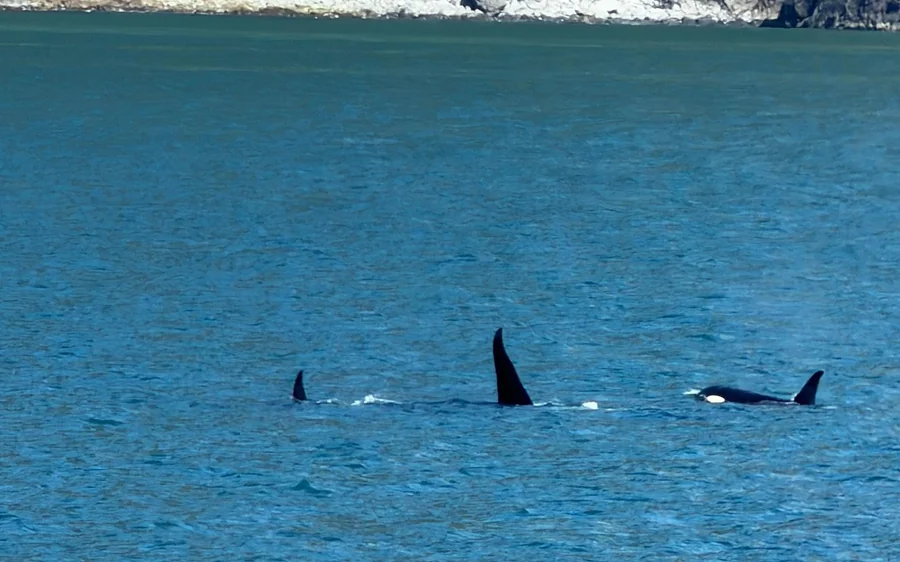
★ 4.9 · 391 reviews
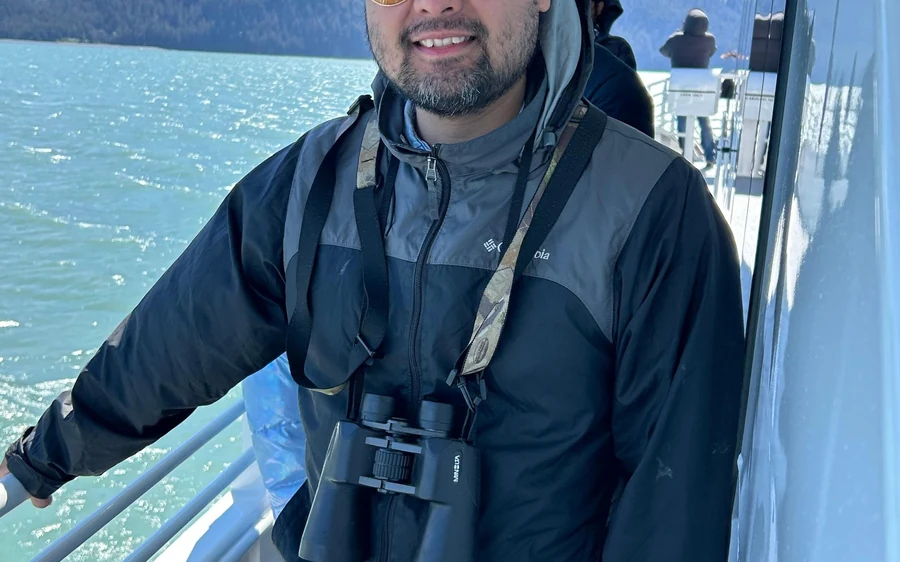
★ 4.9 · 851 reviews
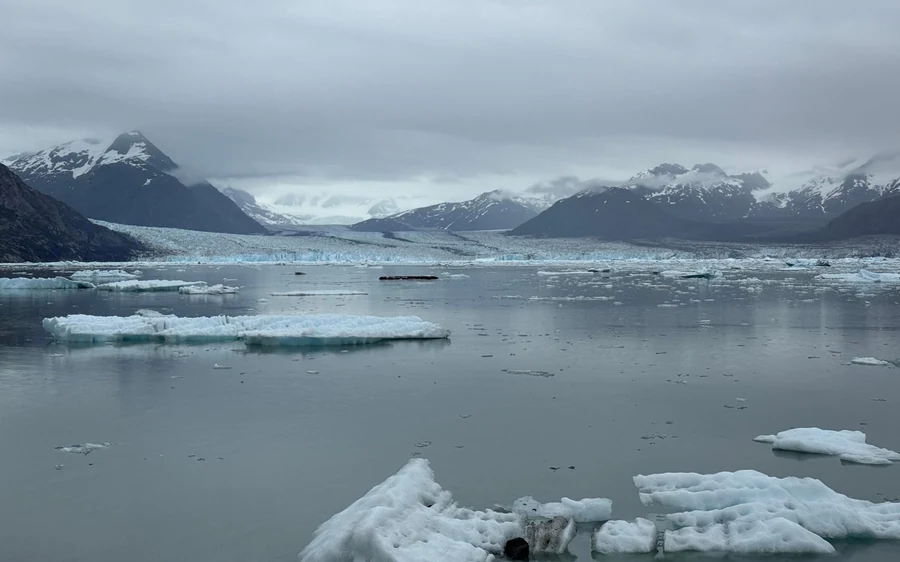
★ 4.8 · 180 reviews
★ 4.8 · 175 reviews
★ 4.9 · 149 reviews
★ 4.9 · 66 reviews
★ 5.0 · 25 reviews
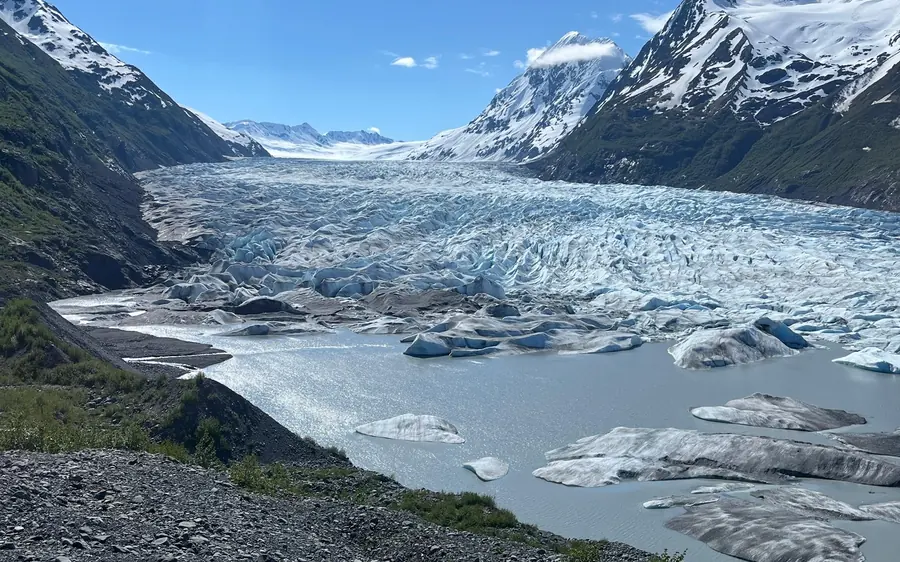
★ 5.0 · 2 reviews
Getting it wrong
All five are decided in a warm car park, twenty minutes before a deck at speed.
Before you leave for the harbour
One minute at the car saves the best hour of the sailing.
Windproof, with a hood. This is the item the whole day turns on, and it is the one people leave behind.
You will be in and out of the cabin repeatedly over six to seven and a half hours.
They weigh nothing and they are the difference between a long glacier stop and a short one.
Decks get wet. So do sleeves, at the rail, at speed.
A practical point rather than a medical one: eat something, take a spot outside with a view of the horizon, and sort yourself out before the boat leaves the harbour.
Common questions
Layers under a windproof jacket with a hood, a hat that covers your ears, thin gloves, closed shoes with grip and sunglasses. These are high-speed catamarans and the sailings run six to seven and a half hours, with the glaciers and the wildlife outside rather than through a window. Dress so that staying on deck is comfortable, because that is where the day you paid for happens.
The listings do not publish a temperature and we are not going to make one up. What they do publish is enough to pack from: a stable, high-speed catamaran, six to seven and a half hours on the water, tidewater glacier stops and open-deck wildlife viewing. A moving boat makes wind of its own, and spray adds water to it, so the windproof outer layer matters more than the thickness of anything underneath.
Sunglasses, a charged camera or phone, a small bag that closes against spray, and something light to eat beforehand. Binoculars are provided aboard on $297 and $265, and lunch is included on most of the sailings — a deli lunch on those two, a hot lunch on $267 and $271. $260 lists a USB charging station at every table.
A windproof jacket that also sheds water is the sensible single item, and a hood does more than an umbrella ever could on a deck. Full waterproof trousers are not needed for a cruise with a cabin. If you are paddling on $406 instead, the listing supplies splash tops, spray skirts and life vests, and you bring the layers that go underneath.
The same list as adults, and more strictly rather than less: a hooded windproof layer, a warm layer under it, a hat that stays on, gloves and closed shoes. The difference is that children are less likely to say they have had enough before they have, so the sensible plan is to over-pack a spare dry layer and keep the cabin as the fallback.
Only the practical version belongs on a travel page. Eat something light rather than skipping breakfast, take a spot outside in the air with the horizon in view rather than a seat below, and sort yourself out before the boat leaves the harbour. One listing, $260 from Whittier, publishes a no-seasickness guarantee in its own highlights. Anything beyond that is a question for your own doctor.
Go deeper
Ten sailings compared by length, what is included and what they cost.
ToursWhat a day in the park covers, on the water and on land.
The national parkWhere the boats go and which glaciers they reach.
From SewardThe harbour, the run out of Resurrection Bay and the day ashore.
WhalesWhat the naturalists look for, and when.
Kenai Fjords National Park Extended Glacier Cruise
★ 4.9 · 391 reviews · Free cancellation 24 h